When I was growing up, I read only fantasy and science fiction, and science fiction was really more in the way of filler, to be consumed when fantasy wasn't available. It's not that I didn't like science fiction, it's just that my mind was shaped to fit Lord of the Rings by my obsessive readings of the same, and so I looked always for more of that sort of thing. The world is of course full of LotR knock offs and imitators, so I had no trouble finding them. In some sense, every writer of fantasy works in the building that Tolkien made. And that, I would say, is the greatest issue with fantasy.
Quick quiz: someone says they're reading a fantasy novel, but doesn't tell you anything else. What do you think about? Heroes going on a quest or fighting some evil, right? And what else? Kings and kingdoms, swords and horses, nobles in castles, grim forests and high snowy mountains. And all of that would be more right than wrong, because typically English-language fantasy exists in a very particular place: 14th century Northern Europe.
This is not exclusively or only true, mind you. There are writers like Guy Gavriel Kay who work with other settings (after starting as a Tolkien chronicler, no less). But most "innovative" fantasy involves twists and quirks on the 14CNE (14th Century Northern Europe) setting rather than something different. And the world is full of other inspirational options, from the very similar to the rather different.
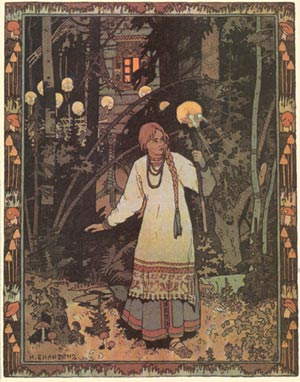
Here's just a few very similar inspirations: Dark Ages Northern Europe with a rougher and more primitive feel; Medieval Space, sophisticated and complicated, warmer and sunnier; Medieval Russia, isolated and rural, superstitious and vast.
More distinct inspirations: Imperial China, scholarly and traditional, confident of superiority, rich with custom and with a viewpoint strikingly different; Medieval Japan, a nearly wild society with effete gentlemen and hidden ladies, derivative of other cultures but bizarrely innovative, poetic and beset by ghosts and demons; classical India, hierarchical and worldly, rich and innovative, absorbing other cultures.
And notions far-fetched from the 14CNE perspective: sub Saharan Africa, with tribes and chieftans, rituals and spirituality; pre-Columbian America, with so very many options, but an almost complete lack of the familiar domesticated animals and metalworks that help to define 14CNE; Tibet, a barely livable landscape of warring priests and demons haunted mountains, violent and vibrantly alive on the edge of survivability.
Taking any of those and building your fantasy setting from it would give you a notably different and much more unique starting point. Imagine, if you will, the Lord of the Rings taking place in pre-Columbian Central America; or Song of Ice and Fire in a world based off Fuedal Japan instead of Fuedal Europe; or Boneshaker set during the Taipeng Rebellion in China instead of the American Civil War. (Not that there's anything wrong with their current settings for any of them, mind you.)
The world's a big place. And while fantasy doesn't always (or even often) take occur in the world we know, there's no reason for it to stick so close to home as it does.
Showing posts with label jason. Show all posts
Wednesday, February 1, 2012
Wednesday, January 25, 2012
The Process of Writing, Part 2: Research and Development
You've got your concept now. The idea that will let you play in the gardens of your own mind. That's just great, isn't it? A wonderful feeling. But an idea isn't enough; it's a nice beginning, but it's not going to suffice to make a book out of. Because an idea isn't enough to hang all those thousands of words on. "What if a white boy and a black slave escaped from their home and went on a journey" works just fine as an idea, but it needs context. Who are they? Where did they live, and when? Where do they go? This is where research and development come in, the first hard part of writing a book.
Ideas, you see, are easy. You can come up with a dozen in the time it takes to drink a cup of coffee. But you'll go through a lot of grounds and filters and cream and sugar getting those ideas sketched out.
Who are your characters? Clever or foolish, young or old, male or female, friendless or social, there are so many details to be considered that it can seem overwhelming. And where are your characters? In Chicago, or Australia, or on a plane, or in a magical kingdom? And when? Right now, or 1840, or "a long time ago", or the future? Is is winter with the snow falling, or the start of fall when the nights are just getting crisp but the days are still warm and lazy? Wow, that's a lot to think about, isn't it?
But as writers, we're all very fortunate. We don't need to know all of that. A writer can figure out much of this stuff as they go along, after doing just a little work to begin with. Your main character might be a 12 year old girl, generally good natured and a little put upon by her family, who lived in a little hamlet out in the country. It might be winter, and the exact time period might be vague: it could be the late 19th century, maybe? And then I can get started, as long as I know enough about those things that I've chosen to proceed. I don't need anything more.
Note that word, though: need. We may want to know more. In the example above, it would be good if I, as the writer, knew that it's not really the late 19th century, but instead the present day of an alternate version of our own world. It would be good for the girl to have a name, and a background, and I should know a thing or two about her family. But a lot of the detail work I can make up on the fly.
That's not to say it works that way for every writer, or for every book, even. Historical fiction will need much more research. So will a novel about sailing, or a pilot, or set in a city you've never visited. And this is where we get to research.
There are a number of ways to approach research. Some people (including me) are minimalists. It's possible to establish a veneer of accuracy and let the reader fill in the blanks. Get the basics down, and the rest will be good enough. It doesn't really matter if I know who the mayor of Savannah was in 1872, though if I'm setting the book there and then, I'd better have a decent reason if I don't use the fellow history tells us was in that office. However, if I do use him, I probably don't have to be too concerned with who he was meeting on the day of June 5th, if that's the day I want my main character to run into him. There are only so many details you need to care about. So I should find out who he was, a little about his personality and positions if I can, and that's fine. Or, as I'm really very much given to minimal research, I can just make up stuff as I need to.
But if you like a little more authenticity, you can follow a great number of options. The internet is full of material, of greater or lesser reliability, ranging from lowly Wikipedia (great if you like to play and loose with your details, bad if you want certainty) to Project Gutenberg's library of scanned documents and books, to scholarly articles and city websites and a great many other things. But I think most of us writers being book people, in the end we fall back on books. Library books, reference books, other novels, travel guides, any number of things. A tall stack of such things really establish that you are Quite Serious about this research thing, as do note cards, flow charts and the like. I am not, in fact Quite Serious, so I can't tell you much more than this: figure out what story you want to tell, and extract about 10% more information that you could ever think of using in the story. Then actually use (as opposed to thinking of using) only about half of the total. The fact that you, as the author, are aware of more than the reader means the world/setting/scenario/what have you, that you're constructing will feel more real. Every story is better when you know there's more to it than you're being shown.
There are other resources that can be brought to bear. Maps, of real or imagined places, of house and work spaces and trips taken by your characters, can be of use to you for descriptive purposes (it's good to keep the kitchen always in the same relation to the living room and the hallway). Some can even make a visit into the book, common for fantasy novels and historical fiction, but occasionally popping up just about anywhere. Family trees can be handy for multi-generational sagas, and again, for historical fiction and fantasy. Drawings of your characters and settings, if you're artistically minded (lucky duck, you!) or have a friend who's the same, can be a great tool.
So now you've got your research notes, your books to reference later, your maps, index cards, genealogies, and flow charts. You've pretty much almost got a book already. Isn't that exciting?
Except for, you know, the writing part. We haven't done that yet. But at least now, we're pretty much ready to do so. And in the next post, I'll talk about getting started on the novel: where to begin, how to begin, and perhaps more importantly, how not to.
Ideas, you see, are easy. You can come up with a dozen in the time it takes to drink a cup of coffee. But you'll go through a lot of grounds and filters and cream and sugar getting those ideas sketched out.
Who are your characters? Clever or foolish, young or old, male or female, friendless or social, there are so many details to be considered that it can seem overwhelming. And where are your characters? In Chicago, or Australia, or on a plane, or in a magical kingdom? And when? Right now, or 1840, or "a long time ago", or the future? Is is winter with the snow falling, or the start of fall when the nights are just getting crisp but the days are still warm and lazy? Wow, that's a lot to think about, isn't it?
But as writers, we're all very fortunate. We don't need to know all of that. A writer can figure out much of this stuff as they go along, after doing just a little work to begin with. Your main character might be a 12 year old girl, generally good natured and a little put upon by her family, who lived in a little hamlet out in the country. It might be winter, and the exact time period might be vague: it could be the late 19th century, maybe? And then I can get started, as long as I know enough about those things that I've chosen to proceed. I don't need anything more.
Note that word, though: need. We may want to know more. In the example above, it would be good if I, as the writer, knew that it's not really the late 19th century, but instead the present day of an alternate version of our own world. It would be good for the girl to have a name, and a background, and I should know a thing or two about her family. But a lot of the detail work I can make up on the fly.
That's not to say it works that way for every writer, or for every book, even. Historical fiction will need much more research. So will a novel about sailing, or a pilot, or set in a city you've never visited. And this is where we get to research.
There are a number of ways to approach research. Some people (including me) are minimalists. It's possible to establish a veneer of accuracy and let the reader fill in the blanks. Get the basics down, and the rest will be good enough. It doesn't really matter if I know who the mayor of Savannah was in 1872, though if I'm setting the book there and then, I'd better have a decent reason if I don't use the fellow history tells us was in that office. However, if I do use him, I probably don't have to be too concerned with who he was meeting on the day of June 5th, if that's the day I want my main character to run into him. There are only so many details you need to care about. So I should find out who he was, a little about his personality and positions if I can, and that's fine. Or, as I'm really very much given to minimal research, I can just make up stuff as I need to.
But if you like a little more authenticity, you can follow a great number of options. The internet is full of material, of greater or lesser reliability, ranging from lowly Wikipedia (great if you like to play and loose with your details, bad if you want certainty) to Project Gutenberg's library of scanned documents and books, to scholarly articles and city websites and a great many other things. But I think most of us writers being book people, in the end we fall back on books. Library books, reference books, other novels, travel guides, any number of things. A tall stack of such things really establish that you are Quite Serious about this research thing, as do note cards, flow charts and the like. I am not, in fact Quite Serious, so I can't tell you much more than this: figure out what story you want to tell, and extract about 10% more information that you could ever think of using in the story. Then actually use (as opposed to thinking of using) only about half of the total. The fact that you, as the author, are aware of more than the reader means the world/setting/scenario/what have you, that you're constructing will feel more real. Every story is better when you know there's more to it than you're being shown.
There are other resources that can be brought to bear. Maps, of real or imagined places, of house and work spaces and trips taken by your characters, can be of use to you for descriptive purposes (it's good to keep the kitchen always in the same relation to the living room and the hallway). Some can even make a visit into the book, common for fantasy novels and historical fiction, but occasionally popping up just about anywhere. Family trees can be handy for multi-generational sagas, and again, for historical fiction and fantasy. Drawings of your characters and settings, if you're artistically minded (lucky duck, you!) or have a friend who's the same, can be a great tool.
So now you've got your research notes, your books to reference later, your maps, index cards, genealogies, and flow charts. You've pretty much almost got a book already. Isn't that exciting?
Except for, you know, the writing part. We haven't done that yet. But at least now, we're pretty much ready to do so. And in the next post, I'll talk about getting started on the novel: where to begin, how to begin, and perhaps more importantly, how not to.
Monday, January 16, 2012
The Process of Writing, Part 1: Concept
In which the author discusses how one comes up with a book.
Writers always get asked, "Where do you get your ideas?" It's a really good question that, unfortunately, we all hate. Ideas are strange and mysterious things, you see. They can come from events that happened in your life, from dreams, from another book, from a random Wikipedia search. Most writers, I think, have far more ideas than they will ever use. We go through scores a year, some so thin and wispy we can't make them work, some so bulky and meaty we don't dare try them at all, and some just perfect for consideration.
For me, at least, the best way to describe an idea before it's written is often with a question. "What if?" something is a good one, or something very similar, like "What would happen if?" Since I write mostly speculative fiction, what if questions are probably the best way to work. But such questions can work for mainstream fiction as well: "What if a white boy and a black slave escaped from their home and went on a journey?" (for example, that being the Adventures of Huckleberry Finn).
So for my books, the questions that could be asked to sum them up might be: What happened to the children of Cleopatra and Marc Antony? What would happen if Michael Darling from Peter Pan was a real person? What if God decided to end the world with a whimper not a bang?
I didn't really think of them in exactly that fashion. Ideas aren't often that neat and tidy. They slouch about in the head, sprawling over one's mental furniture and making nuisances of themselves and a mess of the place. But those questions adequately express something of what the books are about. I will say that in the case of Daughter of Cleopatra, the question of what happened to the children was in fact the cause of the novel. The other two came about a bit more vaguely, one from a notion of updating fairy tales, the other from one image: a snowbound house, and a girl inside it whose mother was dead under the kitchen table.
That's my experience, then.
As to another writer, a person who might think they could tell a story but isn't sure what story to tell or how to tell it, the question is a good way to go about it. Try to find that question that sums up the story: What if Queen Victoria had devoted the resources of her Empire to achieving immortality? What if D. W. Griffith had continued making films glorifying the KKK after Birth of a Nation and then ran for President on an overtly racist platform? What if two people met and fell in love on the day that one of them died; how would the other's life progress?
With varying degrees of difficulty and probabilities of success, any of those could be a book. And all three were conceptualized just this moment. Any idea, any question, can work. Even a thin slip of a question can turn into a novel, though there's more work to be done to get it to that point.
So now there's a concept. In the next post, I'll talk about ways to flesh out the concept by looking at things like setting, genre and style, and by thinking about outlining and doing your research.
Writers always get asked, "Where do you get your ideas?" It's a really good question that, unfortunately, we all hate. Ideas are strange and mysterious things, you see. They can come from events that happened in your life, from dreams, from another book, from a random Wikipedia search. Most writers, I think, have far more ideas than they will ever use. We go through scores a year, some so thin and wispy we can't make them work, some so bulky and meaty we don't dare try them at all, and some just perfect for consideration.
For me, at least, the best way to describe an idea before it's written is often with a question. "What if?" something is a good one, or something very similar, like "What would happen if?" Since I write mostly speculative fiction, what if questions are probably the best way to work. But such questions can work for mainstream fiction as well: "What if a white boy and a black slave escaped from their home and went on a journey?" (for example, that being the Adventures of Huckleberry Finn).
So for my books, the questions that could be asked to sum them up might be: What happened to the children of Cleopatra and Marc Antony? What would happen if Michael Darling from Peter Pan was a real person? What if God decided to end the world with a whimper not a bang?
I didn't really think of them in exactly that fashion. Ideas aren't often that neat and tidy. They slouch about in the head, sprawling over one's mental furniture and making nuisances of themselves and a mess of the place. But those questions adequately express something of what the books are about. I will say that in the case of Daughter of Cleopatra, the question of what happened to the children was in fact the cause of the novel. The other two came about a bit more vaguely, one from a notion of updating fairy tales, the other from one image: a snowbound house, and a girl inside it whose mother was dead under the kitchen table.
That's my experience, then.
As to another writer, a person who might think they could tell a story but isn't sure what story to tell or how to tell it, the question is a good way to go about it. Try to find that question that sums up the story: What if Queen Victoria had devoted the resources of her Empire to achieving immortality? What if D. W. Griffith had continued making films glorifying the KKK after Birth of a Nation and then ran for President on an overtly racist platform? What if two people met and fell in love on the day that one of them died; how would the other's life progress?
With varying degrees of difficulty and probabilities of success, any of those could be a book. And all three were conceptualized just this moment. Any idea, any question, can work. Even a thin slip of a question can turn into a novel, though there's more work to be done to get it to that point.
So now there's a concept. In the next post, I'll talk about ways to flesh out the concept by looking at things like setting, genre and style, and by thinking about outlining and doing your research.
Saturday, January 7, 2012
How to Be Slightly Inaccurate, Historically; and Why
I'm spending a lot of time trying to be a good person as a writer. I'm trying to make sure my writing is at least a little representative of the world as I'd like to have it. Stronger women, gentler men, more minorities, that sort of thing. It's not very hard to do, and not something that is often out of place. But there are moments when I grow a bit concerned, as with my current work in progress.
I'm writing historical dark fairy tale stuff, set in 16th Century rural Austria. Women had rather limited roles there and then, and so I'm reasonably limited in what I can have my female characters do. I know of course that women in real history did all sorts of remarkable things all the time: ruled countries, fought in battles, ran their estates, things that are often overlooked or forgotten. So I can have all that happen, but it doesn't seem like quite enough to me.
Then of course I think about the writing of the last century or two, by men especially. Where women seldom appeared in anything but a moral or supporting role, and did little or nothing of note for the story. Only in dramatic pieces could women be real characters, and then their actions were still strongly limited and curtailed. They might feel real, but they were just as evidently trapped, caged by society. And while this is predominantly historically true, it wasn't always so.
So I think about it, and I realize that if I just keep the characters interesting, and on the edge of the "historically" possible, I'm doing pretty well. I'll do more in other places, other works. History sets limits that can't really be contravened entirely, and I'm not going to. But I will make every effort to step right up to the boundary, and possible slip a toe across now and then. I'd feel bad if I did anything less, and like I was failing as a writer. It seems a small thing, but I have a platform, and I'd rather use it to try to change attitudes than to support a worn out status quo.
I'm writing historical dark fairy tale stuff, set in 16th Century rural Austria. Women had rather limited roles there and then, and so I'm reasonably limited in what I can have my female characters do. I know of course that women in real history did all sorts of remarkable things all the time: ruled countries, fought in battles, ran their estates, things that are often overlooked or forgotten. So I can have all that happen, but it doesn't seem like quite enough to me.
Then of course I think about the writing of the last century or two, by men especially. Where women seldom appeared in anything but a moral or supporting role, and did little or nothing of note for the story. Only in dramatic pieces could women be real characters, and then their actions were still strongly limited and curtailed. They might feel real, but they were just as evidently trapped, caged by society. And while this is predominantly historically true, it wasn't always so.
So I think about it, and I realize that if I just keep the characters interesting, and on the edge of the "historically" possible, I'm doing pretty well. I'll do more in other places, other works. History sets limits that can't really be contravened entirely, and I'm not going to. But I will make every effort to step right up to the boundary, and possible slip a toe across now and then. I'd feel bad if I did anything less, and like I was failing as a writer. It seems a small thing, but I have a platform, and I'd rather use it to try to change attitudes than to support a worn out status quo.
Friday, January 6, 2012
We Are Shaped By Where We Are
It's winter in my writing. The current project, I mean, not always. But as I look over my body of work, I do notice that there's a lot of rain, a lot of snow, a lot of cold weather and unpleasantness. It's not always the case, but it's winter far more often than it's summer. I don't know if it's because it's more dramatic than summer (which in general it is) or if it's just because of Seattle.
Not that it snows here much or often at all. But winter, as a concept, just keeps on going. From some time in October, most often, to some time in April, give or take, not much changes. It's chilly and wet and grey, and in general stays that way through the whole period. And I can only think that my writing mindset has been shaped by that, by the notion that it is always winter, that summer will be a brief and wonderful thing that vanishes completely and is almost forgotten.
So it's winter where I'm writing. And almost always will be, I think.
Not that it snows here much or often at all. But winter, as a concept, just keeps on going. From some time in October, most often, to some time in April, give or take, not much changes. It's chilly and wet and grey, and in general stays that way through the whole period. And I can only think that my writing mindset has been shaped by that, by the notion that it is always winter, that summer will be a brief and wonderful thing that vanishes completely and is almost forgotten.
So it's winter where I'm writing. And almost always will be, I think.
Monday, January 2, 2012
Novel Experience
I wrote a book for National Novel Writing Month, which I'm having read by people just now. That's not new: I pretty much always write a book in November, and most of them are complete, and read, and in many cases ready to go for publishing, if not already published.
All well and good, but that seems to be a bad habit to have gotten in to. I seem to be fixated on the notion of writing books in November: while I can do short stories, and editing, and that sort of thing, I have had very limited success in writing novels at other times of the year in a very long while. But I'm feeling a little confident right now. I'm about half way through another novel that I started eighteen days ago, 34000 words almost, and I think that I'm liking it, and that it's a pretty decent thing as well. With luck, with good effort, and with positive feedback I might finish the thing, which would delightful.
Another new thing, this one completely new, is that I'm having people read the book as I write it. I don't do this. I don't ever do this. Every time I've ever done this, it's resulted in me not finishing the book. I don't know why. Possibly it's because I like to talk, and like to talk about what I'm writing, and don't like to know how things I'm writing will end up. That's a bad combination, because I'll talk, and then talk about the book, and then tell people how I think it will go. And then I will stop writing. This time, though, I'm managing to let people read it, and even field a few questions, offer a few hints, and not completely lose the interest in work.
It's a new feeling for me. I needed to get used to doing it, though, as I'm about to start editing my novel for my publisher, and when that happens, I'm going to need to not lose interest in the work because someone's reading it. So this is good practice.
It's also kind of scary. The book, I mean, not the process. Though there's some of that, too.
All well and good, but that seems to be a bad habit to have gotten in to. I seem to be fixated on the notion of writing books in November: while I can do short stories, and editing, and that sort of thing, I have had very limited success in writing novels at other times of the year in a very long while. But I'm feeling a little confident right now. I'm about half way through another novel that I started eighteen days ago, 34000 words almost, and I think that I'm liking it, and that it's a pretty decent thing as well. With luck, with good effort, and with positive feedback I might finish the thing, which would delightful.
Another new thing, this one completely new, is that I'm having people read the book as I write it. I don't do this. I don't ever do this. Every time I've ever done this, it's resulted in me not finishing the book. I don't know why. Possibly it's because I like to talk, and like to talk about what I'm writing, and don't like to know how things I'm writing will end up. That's a bad combination, because I'll talk, and then talk about the book, and then tell people how I think it will go. And then I will stop writing. This time, though, I'm managing to let people read it, and even field a few questions, offer a few hints, and not completely lose the interest in work.
It's a new feeling for me. I needed to get used to doing it, though, as I'm about to start editing my novel for my publisher, and when that happens, I'm going to need to not lose interest in the work because someone's reading it. So this is good practice.
It's also kind of scary. The book, I mean, not the process. Though there's some of that, too.
Thursday, December 1, 2011
NaNoWriMo is over
Another year, another novel. I set out with some goals for the novel, and here's how that played out:
1) Finish it. Managed this one with a few hours to spare. It's 69.4K words, which isn't as long as an adult fantasy novel should be, but much will be added in edits, so that's not a big problem.
2) Produce a strong, non-stereotyped female lead. I think I did a good job on this, but only reading it will tell. One's memory of a novel as it is written is a bit strange.
3) Set up the possibility for a series of one shots in the same world/with the same characters. Done, and done.
4) Create a convincing world. Um...5 out of 10, maybe? 4 out of 10? This needs some work. A lot of good ideas, but many of them not realized until late in the book, so that I've got to go back and fill in many details in earlier portions. Also, finally realized that the flavor of the book is off, so I'm changing that, too, from slightly-off-of-generic European Fantasy Land, to the more fitting and satisfying suggestive-of-East-Asia Fantasy Land.
5) Represent people of color. Slight success. Improvement spots already noted, and will be made to happen.
6) Manage to not hate the story. Well...working on that, still. We'll see how it plays out. Fix it in post, right?
All of which means, I've got a hunk of book. Medieval city based fantasy with focus on religion and magic and two MCs and a nebulously developed world that needs a lot of work and naming conventions that need to be stabilized and improved and word choices that really need to be expanded for certain words.
Not my best NaNo. Probably my worst. But also the one which I actually had goals for beyond finishing, and that makes it trickier, it appears.
I'm setting it aside until later, and then I'll read and start to fix. Next year, probably, early, but I can't be sure. Whenever I'm ready, and it's ready, and I'm not editing for publication on other books.
1) Finish it. Managed this one with a few hours to spare. It's 69.4K words, which isn't as long as an adult fantasy novel should be, but much will be added in edits, so that's not a big problem.
2) Produce a strong, non-stereotyped female lead. I think I did a good job on this, but only reading it will tell. One's memory of a novel as it is written is a bit strange.
3) Set up the possibility for a series of one shots in the same world/with the same characters. Done, and done.
4) Create a convincing world. Um...5 out of 10, maybe? 4 out of 10? This needs some work. A lot of good ideas, but many of them not realized until late in the book, so that I've got to go back and fill in many details in earlier portions. Also, finally realized that the flavor of the book is off, so I'm changing that, too, from slightly-off-of-generic European Fantasy Land, to the more fitting and satisfying suggestive-of-East-Asia Fantasy Land.
5) Represent people of color. Slight success. Improvement spots already noted, and will be made to happen.
6) Manage to not hate the story. Well...working on that, still. We'll see how it plays out. Fix it in post, right?
All of which means, I've got a hunk of book. Medieval city based fantasy with focus on religion and magic and two MCs and a nebulously developed world that needs a lot of work and naming conventions that need to be stabilized and improved and word choices that really need to be expanded for certain words.
Not my best NaNo. Probably my worst. But also the one which I actually had goals for beyond finishing, and that makes it trickier, it appears.
I'm setting it aside until later, and then I'll read and start to fix. Next year, probably, early, but I can't be sure. Whenever I'm ready, and it's ready, and I'm not editing for publication on other books.
Sunday, November 27, 2011
The Difficulty of Finishing Up
NaNoWriMo is winding down. The home stretch, the last few days. At computers all over the world, people are desperately striving to get to the magic number, 50000. It's a nice big round number, and a great many people will never achieve it, but more importantly, some of them will. They'll get to a few hundred past it, maybe even less, and they'll stop.
The website, you see, has a simple method of figuring out if you wrote a novel. Count the words. Done. There's no other way, of course; no one has time to read scores of thousands of "novels" (I use the word guardedly, as there's perilously little of books in these scribblings most often). So once you get to the 50K, you often just stop. You're done. Goal achieved, badge unlocked, move on.
Most years, I end up writing a novel that's not much longer than that anyway. I like a nice sleek novel, so getting to five thousand words across the line is about all I normally need. This year, however, I'm ending up with something longer. I don't know how much longer; not too much mind you, but sixty or seventy thousand wouldn't shock. Well, at this point, sixty would shock, but in the wrong direction. I can't think I'd finish that quickly. Only I'm having great difficulty getting past the notion that I'm done: I've won the contest, I've put up the word count, and so I should just take a break.
That doesn't work, not for me. If I set it aside, I may never get back to it. So I'm just pushing myself to write, something or anything, to finish it off. It might not be good (then again, this year the novel isn't good, either) but I feel like I have to do it. And hopefully within four days, so that I'm done in a month. The second word of the acronym is after all No for Novel, not Fi for Fifty Thousand Words.
The website, you see, has a simple method of figuring out if you wrote a novel. Count the words. Done. There's no other way, of course; no one has time to read scores of thousands of "novels" (I use the word guardedly, as there's perilously little of books in these scribblings most often). So once you get to the 50K, you often just stop. You're done. Goal achieved, badge unlocked, move on.
Most years, I end up writing a novel that's not much longer than that anyway. I like a nice sleek novel, so getting to five thousand words across the line is about all I normally need. This year, however, I'm ending up with something longer. I don't know how much longer; not too much mind you, but sixty or seventy thousand wouldn't shock. Well, at this point, sixty would shock, but in the wrong direction. I can't think I'd finish that quickly. Only I'm having great difficulty getting past the notion that I'm done: I've won the contest, I've put up the word count, and so I should just take a break.
That doesn't work, not for me. If I set it aside, I may never get back to it. So I'm just pushing myself to write, something or anything, to finish it off. It might not be good (then again, this year the novel isn't good, either) but I feel like I have to do it. And hopefully within four days, so that I'm done in a month. The second word of the acronym is after all No for Novel, not Fi for Fifty Thousand Words.
Friday, November 25, 2011
Ruff, Washington
I haven't posted for a long while. I blame two things: NaNoWriMo, and getting married. The latter took up way more time, and left me with precious little for anything else. But it's happened now, I have a husband, and that's wonderful.
This year for Thanksgiving I went to Eastern Washington to spend the day with the husband's family. His mother (and his uncle and aunts) were all born in a little spot of a place called Ruff (pronounced Roof), Washington. It's barely visible on maps. There are grain silos, a couple of streets, one house and several trailers. Almost everyone living there is a cousin of my husband, but that's not a lot of people, maybe a dozen. If Ruff was ever incorporated, no one seems to know about it.
It wasn't always like that, though. Once upon a time, there used to something like a real town there. In the teens of the last century, there was a Model T assembly plant which lasted for some years, and the town was host to a rail station of some note. There would have been a store or two, and housing for the people who worked in the plant, and probably a bar or a restaurant. There was certainly a ten room hotel, which lasted into the 70s though not as a commercial operation; instead, my husband's mother and her siblings grew up in it, moving from room to room as the mood took them, with their parents hosting massive parties in the huge, dilapidated building. I don't know when everyone had moved out by, but it couldn't have been later than about 1975 or so. The building lasted a while longer, in an ever more ruinous state, before finally being torn down maybe 20 years ago. No one seems certain about when exactly that happened. If you look at the map, you can still see the vague ruins of the building on the corner of Main and W3.
Towns like this used to exist all over the rural areas of the nation, little places where local production and industry flared up before consolidation and better transportation did away with them. Probably there were a few hundred people in Ruff at one point, and a few hundred in dozens of similar places just in Washington that have since vanished off the map, mostly or entirely.
Another is Marlin, the "town" the was part of my husband's address when he was a little kid. It's part of a place called Krupp that changed its name during WWI, as Krupp was the name of Germany's biggest armaments firm. But it's still half Krupp and half Marlin, and both are listed on maps. Which is silly, as the place has only 60 people, the smallest incorporated community in Washington State. It's a speck, a spot on a map that you might not even find. There's a post office, left over from better days. There's not a gas station, from what I can tell, and there's no businesses at all beyond the P.O. Why there are still any people there, I can't guess. I suppose most of them work small farms, because that's the sort of area it's in. I suppose also that many of those people are children, who will move away to a big town like Moses Lake, or dream big and head to Seattle; or else fall into meth and boredom and linger on in their empty spaces.
We drove through dozens of little decaying places: Harrington and Wilbur and Hartline, Almira and Coulee City and others whose names I can't recall. Everything breaking down and vanishing, the old lovely houses replaced by trailers, the trailers replaced by empty fields littered with old rusty wreckage, the fields forgotten except for a little graveyard tucked away in an odd corner.
If there were more hills and hollows, it would all be well suited for horror, but the vistas are too open, the light too bright. I wonder what it would take to give some life back to these places, to make them attractive to people again. In this age when the internet brings the world to your home, I wonder that it doesn't promote more distant living. But at least near Ruff, it doesn't. It's lonely out there, and vast. All the little places are being swallowed up in the distance.
This year for Thanksgiving I went to Eastern Washington to spend the day with the husband's family. His mother (and his uncle and aunts) were all born in a little spot of a place called Ruff (pronounced Roof), Washington. It's barely visible on maps. There are grain silos, a couple of streets, one house and several trailers. Almost everyone living there is a cousin of my husband, but that's not a lot of people, maybe a dozen. If Ruff was ever incorporated, no one seems to know about it.
It wasn't always like that, though. Once upon a time, there used to something like a real town there. In the teens of the last century, there was a Model T assembly plant which lasted for some years, and the town was host to a rail station of some note. There would have been a store or two, and housing for the people who worked in the plant, and probably a bar or a restaurant. There was certainly a ten room hotel, which lasted into the 70s though not as a commercial operation; instead, my husband's mother and her siblings grew up in it, moving from room to room as the mood took them, with their parents hosting massive parties in the huge, dilapidated building. I don't know when everyone had moved out by, but it couldn't have been later than about 1975 or so. The building lasted a while longer, in an ever more ruinous state, before finally being torn down maybe 20 years ago. No one seems certain about when exactly that happened. If you look at the map, you can still see the vague ruins of the building on the corner of Main and W3.
Towns like this used to exist all over the rural areas of the nation, little places where local production and industry flared up before consolidation and better transportation did away with them. Probably there were a few hundred people in Ruff at one point, and a few hundred in dozens of similar places just in Washington that have since vanished off the map, mostly or entirely.
Another is Marlin, the "town" the was part of my husband's address when he was a little kid. It's part of a place called Krupp that changed its name during WWI, as Krupp was the name of Germany's biggest armaments firm. But it's still half Krupp and half Marlin, and both are listed on maps. Which is silly, as the place has only 60 people, the smallest incorporated community in Washington State. It's a speck, a spot on a map that you might not even find. There's a post office, left over from better days. There's not a gas station, from what I can tell, and there's no businesses at all beyond the P.O. Why there are still any people there, I can't guess. I suppose most of them work small farms, because that's the sort of area it's in. I suppose also that many of those people are children, who will move away to a big town like Moses Lake, or dream big and head to Seattle; or else fall into meth and boredom and linger on in their empty spaces.
We drove through dozens of little decaying places: Harrington and Wilbur and Hartline, Almira and Coulee City and others whose names I can't recall. Everything breaking down and vanishing, the old lovely houses replaced by trailers, the trailers replaced by empty fields littered with old rusty wreckage, the fields forgotten except for a little graveyard tucked away in an odd corner.
If there were more hills and hollows, it would all be well suited for horror, but the vistas are too open, the light too bright. I wonder what it would take to give some life back to these places, to make them attractive to people again. In this age when the internet brings the world to your home, I wonder that it doesn't promote more distant living. But at least near Ruff, it doesn't. It's lonely out there, and vast. All the little places are being swallowed up in the distance.
Monday, October 31, 2011
Happy Halloween
Halloween's on a Monday, to which I say boo in the jeering fashion, rather than the scaring. When I was a child, it never mattered what day was Halloween, of course: if it was a school day, you might wear your costume there, and then get home and have dinner, and then get to trick or treating as soon as it started to get the least bit dark. Monday was as good as any other day. But as a grown person, you like your holidays to fall on the weekend: Friday and Saturday are the best nights for parties, you know. I used to throw Halloween parties, but there's just too much that happens, and over the years, the number of events going on has only increased, so that two years ago we threw our last party for the biggest dress up occasion of the year. It was sad, but we had far too many people showing up for twenty minutes before they ran off to another party (often three or four more parties). End result was a party of fifteen people with five or eight wandering through at any moment. Not awful, or anything, but the parties I once threw were big productions, so Halloween quit being worth it.
Now I'm an old fuddy duddy, and I sit in my apartment and look down at the streets below, thronging with costumed revelers wandering about. I do not, myself, get dressed up, but then, since I was a child, I seldom have. And I rather hope that there's no knocking at our door tonight (I think there are no kids in our building, or at least, I've never seen one, so we may be okay) because we don't have any treats to give out. A bit of a grouchy curmudgeon, that's me these days.
Truly, though, I don't object. Happy Halloween, and all that. Enjoy it, if you're able to do so on a Monday, or if you already did over the weekend. I'll be sitting at home, having some dinner, probably watching Cabaret because Netflix sent it along. Inappropriate, I know. Maybe we'll dig up a horror movie we can watch instantly?
Happy Halloween in any case.
Friday, October 28, 2011
National Novel Writing Month
There's this thing called National Novel Writing Month, or NaNoWriMo for shorter, which I do. Or have done. Or something. I think the first time I did it was in 2004, though I may be wrong, it might have been 2003. All records of the period have grown sketchy, and the computers I wrote on then, which might have contained such information, are corrupted and long dead. In any case, from that point I've given it at least a shot every year: try to write a novel of at least 50000 words in one month (November).
There's been a good amount of success. Two years ago I wrote Engines of the Broken World; a couple edits later, it got bought by a publisher, and looks likely to make its way to shelves in time for NaNo 2012 (or maybe 2013, the timing on publishing being not an exact science). 2006 was Daughter of Cleopatra, which I've epublished; 2010 was Never, which is probably my favorite of all the things I've written, and is also readily available. Other years brought Speech of Angels, being edited and polished, and the House of the Serpent, ditto (though it needs much more editing and polishing). There was the year I was at sea, and didn't finish anything (sad year for NaNo, but hell, I was sailing around the world, and I was pretty impressed that I even gave it a shot).
This year I'm getting married in November. That takes up, as you may know and can certainly imagine, a goodly bit of time in the lead up, and then there's a honeymoon after. So it's not going to be the best month for writing a book. But I'm still going to give it a try, and see what comes. I suspect another failed attempt, and I won't much blame myself for it. One must, however, make the attempt. And so should you, dear readers, if the least hint of being a novelist has entered your head.
One month. One book. It's a hard equation to master, but simple in concept.
There's been a good amount of success. Two years ago I wrote Engines of the Broken World; a couple edits later, it got bought by a publisher, and looks likely to make its way to shelves in time for NaNo 2012 (or maybe 2013, the timing on publishing being not an exact science). 2006 was Daughter of Cleopatra, which I've epublished; 2010 was Never, which is probably my favorite of all the things I've written, and is also readily available. Other years brought Speech of Angels, being edited and polished, and the House of the Serpent, ditto (though it needs much more editing and polishing). There was the year I was at sea, and didn't finish anything (sad year for NaNo, but hell, I was sailing around the world, and I was pretty impressed that I even gave it a shot).
This year I'm getting married in November. That takes up, as you may know and can certainly imagine, a goodly bit of time in the lead up, and then there's a honeymoon after. So it's not going to be the best month for writing a book. But I'm still going to give it a try, and see what comes. I suspect another failed attempt, and I won't much blame myself for it. One must, however, make the attempt. And so should you, dear readers, if the least hint of being a novelist has entered your head.
One month. One book. It's a hard equation to master, but simple in concept.
Sunday, October 16, 2011
Steamcon
We went to Steamcon this weekend. Both Peter and I were lucky enough to be invited panelists, meaning we got to sit in the front of various rooms and talk about topics that were, mainly, of interest to us. Peter talked about Confederate privateers. I talked about the Hollow Earth. We both talked about epublishing. We met authors, we met game designers. We were accompanied in all our endeavors by the delightful Bev Gelfand, who I finally met in person. We all saw incredible fashion, amazing inventions, stupendous accessorizing, and more squid folk than anyone would anticipate.
I had a great time. I'm going to go again next year, it seems almost certain. Steamcon kind of ruled.
Wednesday, October 12, 2011
Occasional Vocabulary
Not running at a very regular pace any longer, sadly. I'd love to post every day. It would be so easy to do so, too. And yet...it's not happening. Which brings me to today's word.
entropy: the tendency for things to decline into a state of inert uniformity. This may not actually be a thing that happens. It seems like it does, and the universe seems to suggest that it will, eventually, happen to everything. But we won't be around to see it, and definitely in our own lives, it will not occur. Until it occurs to each of us, singly, though perhaps in groups on occasion; entropy on a personal level isn't avoidable.
Perhaps also on a blog level? We'll see.
entropy: the tendency for things to decline into a state of inert uniformity. This may not actually be a thing that happens. It seems like it does, and the universe seems to suggest that it will, eventually, happen to everything. But we won't be around to see it, and definitely in our own lives, it will not occur. Until it occurs to each of us, singly, though perhaps in groups on occasion; entropy on a personal level isn't avoidable.
Perhaps also on a blog level? We'll see.
Tuesday, October 11, 2011
Curses, foiled again!
I wrote a while ago, in one of the early Daily Vocabulary posts, about gremlins. They're all over the poor EBM machine right now, and they can't be dismissed because the lovely and talented Anna, who runs the device and perforce must fix it, has herself been overcome by human-based gremlins, that is, germs. She's out sick. As we draw perilously close to zero hour for having copies of the 20001 Anthologie ready for sale, will our heroes make it? Too soon to tell, but tune in tomorrow for another breathtaking update.
Monday, October 10, 2011
Machines, and Troubles
We're getting ready the print version of 20001. This is exciting. Layout, formatting, cover, all done. Looks good, too. But its got to be printed up, and the machine on which it is to be printed is persnickety. It's a delicate device, one with lots of little widgets and parts. There's a problem as a result, which is that the binding process is off center. The spine is disturbed. So we're stuck in place while we try to get it fixed, and that's an issue. It wouldn't be a real problem, except that we have a convention coming up, and want to have copies to sell. So that's a serious concern. One that hopefully will be fixed tomorrow.
Hopefully.
Hopefully.
Sunday, October 9, 2011
Walking off of cliffs, and climbing back up them
Having gotten bogged down in dissatisfaction with the current work in progress, I've done almost nothing on it in perhaps 10 days. Three pages, maybe, and I don't much like them. Or not that I don't much like them, but that, well, I don't much like the whole thing anymore.
In writing circles, there are those who plot out carefully, often called (surprise) plotters, and those who work best on the fly, often called pantsers (as in, seat of the pants). I fall strongly into the pantser category, preferring to just write, and thinking that everything will work out. That's usually true, but sometimes you realize partway into something that you've got it all wrong. You realize, perhaps, that the church in your world should not be just a pale shadow of the Catholic church with a few extras and accessories to make it different. Perhaps it should be vaguely modeled on that most ancient of churches, but with vast and varied changes. All of which only occurred to me 75 pages into the story, and which would require a complete reworking of almost everything to incorporate them.
Thus, I realize I've done myself a bad turn. I've rendered the story lifeless and silly in my eyes, and have walked off a cliff of my own making. Or flung myself off it, really, so that I'm now plunging into an abyss of stupid prose.
Two choices exist (three really, but the third is starting a new work, and that's out for purposes of this discussion). I can either go back and make the changes (long, tiring, liable to mistakes), or I can start all over again (frustrating to have to do, but potentially vastly liberating). I'm choosing the latter: the mothball the current WIP and leave it as is, under a drop cloth in case I need anything from it; at the same time, I'll start the new WIP, which is the old one transformed using my new ideas and knowledge. I'm casting off 20000 words, but if I do it write, they'll come back quickly enough. I have characters I enjoy, and they can come with me, as can much of the setting. But the culture, that's what I'm changing, and it needs the change to give the piece some life. Life, and internal consistency: there's no way a pale shadow of the Catholic church would be sufficient to the needs of this world, or that such a church could have even really evolved.
So, I look up from the abyss, and set to climbing out of holes of my own making. Hopefully I've got the correct gear for it. More updates as I succeed, or perhaps even fail. Failure, though, also has value. Lessons will be learned either way. But here's hoping for success all the same.
In writing circles, there are those who plot out carefully, often called (surprise) plotters, and those who work best on the fly, often called pantsers (as in, seat of the pants). I fall strongly into the pantser category, preferring to just write, and thinking that everything will work out. That's usually true, but sometimes you realize partway into something that you've got it all wrong. You realize, perhaps, that the church in your world should not be just a pale shadow of the Catholic church with a few extras and accessories to make it different. Perhaps it should be vaguely modeled on that most ancient of churches, but with vast and varied changes. All of which only occurred to me 75 pages into the story, and which would require a complete reworking of almost everything to incorporate them.
Thus, I realize I've done myself a bad turn. I've rendered the story lifeless and silly in my eyes, and have walked off a cliff of my own making. Or flung myself off it, really, so that I'm now plunging into an abyss of stupid prose.
Two choices exist (three really, but the third is starting a new work, and that's out for purposes of this discussion). I can either go back and make the changes (long, tiring, liable to mistakes), or I can start all over again (frustrating to have to do, but potentially vastly liberating). I'm choosing the latter: the mothball the current WIP and leave it as is, under a drop cloth in case I need anything from it; at the same time, I'll start the new WIP, which is the old one transformed using my new ideas and knowledge. I'm casting off 20000 words, but if I do it write, they'll come back quickly enough. I have characters I enjoy, and they can come with me, as can much of the setting. But the culture, that's what I'm changing, and it needs the change to give the piece some life. Life, and internal consistency: there's no way a pale shadow of the Catholic church would be sufficient to the needs of this world, or that such a church could have even really evolved.
So, I look up from the abyss, and set to climbing out of holes of my own making. Hopefully I've got the correct gear for it. More updates as I succeed, or perhaps even fail. Failure, though, also has value. Lessons will be learned either way. But here's hoping for success all the same.
Saturday, October 8, 2011
Daily Vocabulary
blight: something that impairs growth, withers hopes and ambitions or impedes progress and prosperity. Urban blight is one such thing we speak of: when a city is decayed due to infrastructure problems for instance, or due to poor governance or high crime rates. Plants get blights of various sorts all the time, and entire books are devoted to trying to get rid of them. Sometimes people or peoples are referred to as blights as well, because they're noxious or annoying. Whatever the blight is, though, I'm really very fond of this definition. "Withers hopes and ambitions" is the key phrase for me. Withers hopes. A rather poetical and metaphorical phrase for a definition, taken in this case from the American Heritage Dictionary. Someone at the AmHer slipped a nice turn of phrase in here and there. It's delightful to me.
Friday, October 7, 2011
Why Not Detroit?
Forty years ago, give or take a few years, New York City went through a wondrous renaissance. While there had always been artists there, the low rents and empty spaces, the vague element of danger and lawlessness, all made sure that Manhattan became the center of the arts in America. Fashion, photography, painting, music, writing, everything had a place in the city in those days, as artists were able to take a chance, move to the city because they could afford to, and scrape by until they either drifted home, or in a surprising number of cases made it big.
I speak only of Manhattan. Nobody in those days, I'm given to understand, went to the burroughs, or thought much of them. Only on the island was there much in the way of life and culture; the Bronx and Brooklyn and Queens went on as working class sub cities, homes to immigrants and industry. While there were probably a few exceptions, the vast majority of the artistic rebirth in New York was concentrated between the Hudson and East Rivers.
Four decades on, New York is safe, prosperous and above all expensive. Not that there was ever a time when you couldn't find vastly pricey properties in Manhattan, and hugely high rents. But back in 1970, you could still also find broken down corners where no one went, where urban decay had taken hold, where you could get a big loft for a couple hundred dollars, or a rundown walkup apartment on the fifth floor of a rickety building. Now every spot in Manhattan is gentrified, expensive even if doesn't look it, and still somehow full of artists, now piled six deep in a tiny space fit for one, struggling to pay rent and eat in ways they never did before, unable to have a workspace except out in the very sub cities that were once shunned.
So what now? Articles are being written about how New York's creative boom years are ending, or already ended, because of the problems of rent and space. And perhaps there's no need for a city of artists any longer. The internet brings together writers, photographers, painters, designers, in ways that "mere" proximity never could, right?
Or wrong. There is nothing so stimulating to art as meeting with and talking to other artists, gathering and speaking together, looking over each other's work. There is nothing that makes art as possible as spaces for it to exist in, studios and theaters and galleries. New York for long and long has been that place, but it can be that place for at best a little time longer.
Why not Detroit, then? It might sound ridiculous. But examine the case. Detroit is in many ways very similar to Manhattan in the 60s: broken down, with crime and urban decay as massive concerns, population decline, cheap rents. It's a city ripe for rebirth. right now you can find places like this, slightly smaller than my apartment in Seattle and a third the price. This is for a city that, until a couple of decades ago, was the third largest in the nation, a proud and mighty metropolis.
I can hear the objections. It's Detroit! people will say, as if that matters. New York? They'll kill you! was what they said in in the Nixon years, and into the Reagan years even. People still went. Nobody wants to be the first, someone might say. Well, perhaps not. But there's a very attractive level of availability there, isn't there? Cheap rents, opportunities for everything, close proximity to the great outdoors (no, really) and to Canada (really? yes!). The climates even match pretty well: muggy and hot in summer, and chill and snowy in the winter.
Is this a real possibility? Can people go to Detroit, make it a city of art, and get it going as a reborn, growing city again? I don't know. But there's historical precedent, and there's no reason not to give it a shot. The place can use artists. As for me, I'm freakishly sensitive to weather change, being from Seattle, so I don't know that I could make it. But...it's tempting, isn't it? To try to be the explorers, the settlers, of a new place (an old place made new, in this case). What might not be accomplished.
Why not Detroit, then?
I speak only of Manhattan. Nobody in those days, I'm given to understand, went to the burroughs, or thought much of them. Only on the island was there much in the way of life and culture; the Bronx and Brooklyn and Queens went on as working class sub cities, homes to immigrants and industry. While there were probably a few exceptions, the vast majority of the artistic rebirth in New York was concentrated between the Hudson and East Rivers.
Four decades on, New York is safe, prosperous and above all expensive. Not that there was ever a time when you couldn't find vastly pricey properties in Manhattan, and hugely high rents. But back in 1970, you could still also find broken down corners where no one went, where urban decay had taken hold, where you could get a big loft for a couple hundred dollars, or a rundown walkup apartment on the fifth floor of a rickety building. Now every spot in Manhattan is gentrified, expensive even if doesn't look it, and still somehow full of artists, now piled six deep in a tiny space fit for one, struggling to pay rent and eat in ways they never did before, unable to have a workspace except out in the very sub cities that were once shunned.
So what now? Articles are being written about how New York's creative boom years are ending, or already ended, because of the problems of rent and space. And perhaps there's no need for a city of artists any longer. The internet brings together writers, photographers, painters, designers, in ways that "mere" proximity never could, right?
Or wrong. There is nothing so stimulating to art as meeting with and talking to other artists, gathering and speaking together, looking over each other's work. There is nothing that makes art as possible as spaces for it to exist in, studios and theaters and galleries. New York for long and long has been that place, but it can be that place for at best a little time longer.
Why not Detroit, then? It might sound ridiculous. But examine the case. Detroit is in many ways very similar to Manhattan in the 60s: broken down, with crime and urban decay as massive concerns, population decline, cheap rents. It's a city ripe for rebirth. right now you can find places like this, slightly smaller than my apartment in Seattle and a third the price. This is for a city that, until a couple of decades ago, was the third largest in the nation, a proud and mighty metropolis.
I can hear the objections. It's Detroit! people will say, as if that matters. New York? They'll kill you! was what they said in in the Nixon years, and into the Reagan years even. People still went. Nobody wants to be the first, someone might say. Well, perhaps not. But there's a very attractive level of availability there, isn't there? Cheap rents, opportunities for everything, close proximity to the great outdoors (no, really) and to Canada (really? yes!). The climates even match pretty well: muggy and hot in summer, and chill and snowy in the winter.
Is this a real possibility? Can people go to Detroit, make it a city of art, and get it going as a reborn, growing city again? I don't know. But there's historical precedent, and there's no reason not to give it a shot. The place can use artists. As for me, I'm freakishly sensitive to weather change, being from Seattle, so I don't know that I could make it. But...it's tempting, isn't it? To try to be the explorers, the settlers, of a new place (an old place made new, in this case). What might not be accomplished.
Why not Detroit, then?
Wednesday, October 5, 2011
Daily Vocabulary
per cent.: In modern, American usage, each percent is one hundredth of the whole. Fifty percent, for instance, would be half. But there is an older, more interesting usage, most common in England, and not even that long ago in common use, which was per cent., split in half and with a period at the end. Cent. stood for centum, the Latin for hundred, so that it was properly per centum, out of a hundred. 5 per cent., in the proper British sense, would be 5 per centum, five out of a hundred, exactly as it would be here. But we don't think of it in the original, the per cent. that is delightful and strange. I very much like the per centum. I wish we still used it here.
We Are The 99% (of writers)
I'm not talking about finance here. Or in a sense, I am. I'm talking about writers. And I am, Peter is, you are if you're reading this, one of the 99%. I can say this with confidence, because I know Stephen King isn't reading this; I know J. K. Rowling isn't reading this. We lowly working class writers, the ones who make little or no money, who can only dream of anything like success, we are the majority. The vast masses of those who work with words.
What does this have to do with protests, with opposition to Wall Street, with anything that would make it worthwhile to co-opt a slogan for a title? Well, the main thing is this: we all of us want things to change. And we none of us know exactly what we can make change. Do we have goals, do we have dreams, can we even, to some degree, express them? Of course. But there's nothing exactly we can do, right?
That's no more true for a working class writer than it is for a working class American, though. We can get out there and make some noise: call attention to ourselves and to others like us, try to shed some light on our problems and on our accomplishments. We can band together, because a group of voices can be heard more than one lone crier in the wild. We can hope for improvement, that we'll be heard and results will happen.
The odds of success seem slim, of course. But we each of us have some this far: we've written a book, or more than one. We've decided to put it out there. That's the hardest part. The rest is just luck, or fate, hard work or determination.
We'll never be the 1%. It's not going to happen. But we can, just maybe, succeed better than we might dream.
What does this have to do with protests, with opposition to Wall Street, with anything that would make it worthwhile to co-opt a slogan for a title? Well, the main thing is this: we all of us want things to change. And we none of us know exactly what we can make change. Do we have goals, do we have dreams, can we even, to some degree, express them? Of course. But there's nothing exactly we can do, right?
That's no more true for a working class writer than it is for a working class American, though. We can get out there and make some noise: call attention to ourselves and to others like us, try to shed some light on our problems and on our accomplishments. We can band together, because a group of voices can be heard more than one lone crier in the wild. We can hope for improvement, that we'll be heard and results will happen.
The odds of success seem slim, of course. But we each of us have some this far: we've written a book, or more than one. We've decided to put it out there. That's the hardest part. The rest is just luck, or fate, hard work or determination.
We'll never be the 1%. It's not going to happen. But we can, just maybe, succeed better than we might dream.
Subscribe to:
Posts (Atom)